Loch Lomond and The Trossachs
National park in Scotland
| Coordinates: | 56.23, -4.58 |
|---|---|
| OS grid ref: | NN 40 07 |
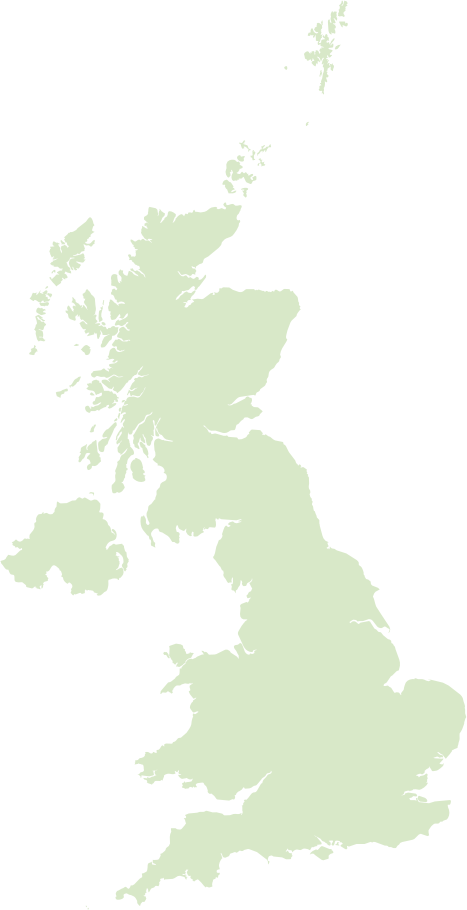
Loch Lomond and The Trossachs National Park sits on the northern fringe of Glasgow and covers roughly 1,865 km² (about 720 square miles). It is a striking mix of landscapes: the broad waters of Loch Lomond (the largest freshwater loch in Great Britain by surface area), steep hills and munros including Ben Lomond rising to around 974 metres, interspersed with glens, small lochs and ancient woodlands.
The park has a strong cultural and historic identity - The Trossachs were celebrated by Sir Walter Scott and the area is tied to Highland folklore and figures such as Rob Roy. Small towns and villages like Luss and Callander retain traditional character, while historic houses and castles such as Inveraray Castle dot the wider landscape. Long-distance routes including the West Highland Way make it a magnet for walkers, cyclists and water-sports enthusiasts.
Tourism is the park’s major economic driver, supporting local businesses, accommodation and outdoor-guiding services, alongside farming, forestry and some renewable-energy projects. That popularity brings management challenges: balancing high visitor numbers with conservation and supporting resilient local communities is an ongoing priority for the National Park Authority, which has looked to sustainable tourism and habitat restoration as part of its strategy.
Ecologically the park is important for native oak and pine woodlands, freshwater habitats and upland ecosystems that support red deer, otters and many bird species, making it a key area for conservation and outdoor education. As one of Scotland’s two national parks it remains central to the country’s natural identity - scenic, culturally rich and actively managed for both people and nature.
Towns and villages in Loch Lomond and The Trossachs National Park
- Aberfoyle Place
- Balloch and Haldane Place
- Blairmore Place
- Callander Place
- Cowal Ward
- Drymen Place
- Forth and Endrick Ward
- Helensburgh and Lomond South Ward
- Inchcruin Island
- Inchfad Island
- Inchlonaig Island
- Inchmahome Island
- Inchmurrin Island
- Inchtavannach Island
- Killin Place
- Lomond Ward
- Lomond North Ward
- Strathearn Ward
- Trossachs and Teith Ward
Loch Lomond and The Trossachs postcode areas
FK8, FK17, FK18, FK19, FK20, FK21, G63, G83, G84, PA23, PA24, PA27, PH6
Most populated places nearby
- Glasgow 28.9 miles
- Paisley 27.1 miles
- Cumbernauld 29.6 miles
- Greenock 20.9 miles
- Stirling 25.8 miles
- Bearsden 23.6 miles
- Clydebank 23.3 miles
- Bishopbriggs 26.3 miles
- Renfrew 25.6 miles
- Dumbarton 19.5 miles
- Kirkintilloch 26.4 miles
- Johnstone 27.8 miles
Example postcodes in Loch Lomond and The Trossachs
PH6 2NJ, FK8 3LD, PA23 8SE, FK19 8PQ, FK17 8HD, FK8 3TQ, FK8 3UF, G63 0JQ, G63 0AU … See all