County Durham
Unitary authority in England
| Coordinates: | 54.7, -1.77 |
|---|---|
| OS grid ref: | NZ 14 33 |
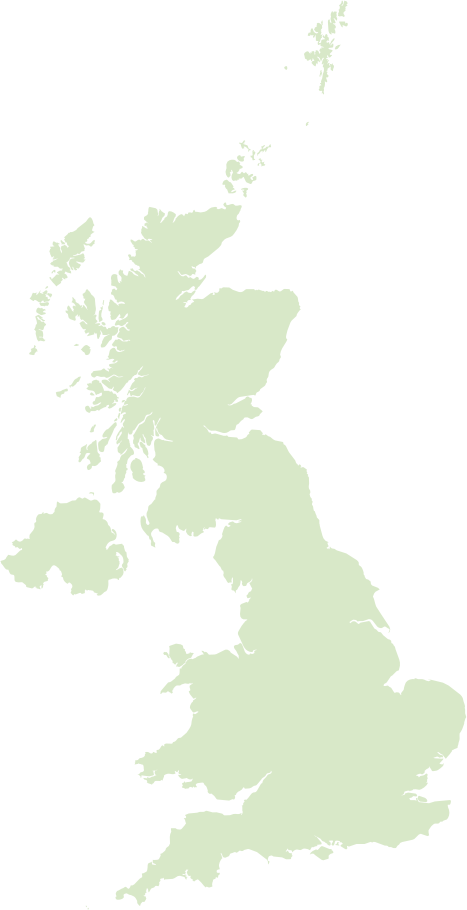
County Durham sits in the north-east of England and covers a varied landscape from the rolling moors of the North Pennines and the Durham Dales to a short, stony coastline around Seaham. The River Wear carves a dramatic valley through the county and gives its most famous settlement, Durham city, a naturally defensible peninsular site.
The area is rich in history: Durham Cathedral and the adjacent castle form a UNESCO World Heritage ensemble and reflect the medieval power of the Prince Bishops. Industrial heritage is preserved at places such as the open‑air Beamish Museum, while Durham University adds a scholarly and cultural pulse to the city, highlighted by events like the biennial Lumiere light festival.
Economically the county moved from coal and heavy industry to a more mixed economy of education, public services, manufacturing and tourism, with ongoing regeneration in former mining towns and steel centres such as Consett and Bishop Auckland. Rural communities remain important and the area is popular for walking, cycling and reservoir‑based recreation, giving it a balance of urban, industrial and largely unspoilt countryside character.
County Durham postcode districts
DH1, DH2, DH3, DH6, DH7, DH8, DH9, DL4, DL5, DL12, DL13, DL14, DL15, DL16, DL17, SR7, SR8, TS21, TS27, TS28, TS29
Most populated places in County Durham
Places in County Durham
- Annfield Plain Built-up area
- Barnard Castle Built-up area
- Bishop Auckland Built-up area
- Bowburn Built-up area
- Brandon Built-up area
- Brandon and Byshottles Parish
- Burnopfield Built-up area
- Castleside Built-up area
- Chester-le-Street Built-up area
- Consett Built-up area
- Coxhoe Built-up area
- Crook Built-up area
- Durham Built-up area
- Easington Built-up area
- Easington Village Parish
- Ferryhill Built-up area
- Lanchester Built-up area
- Langley Park Built-up area
- Murton Built-up area
- Newton Aycliffe Built-up area
- Pelton Built-up area
- Peterlee Built-up area
- Sacriston Built-up area
- Seaham Built-up area
- Sedgefield Built-up area
- Shildon Built-up area
- Spennymoor Built-up area
- Stanley Built-up area
- Ushaw Moor and Bearpark Built-up area
- Willington Built-up area
- Wingate Built-up area
- … See all